
NFC vs QR codes for building assets
Both technologies can open an asset record. The best approach uses each for what it does well and does not make access depend on a specialist app.
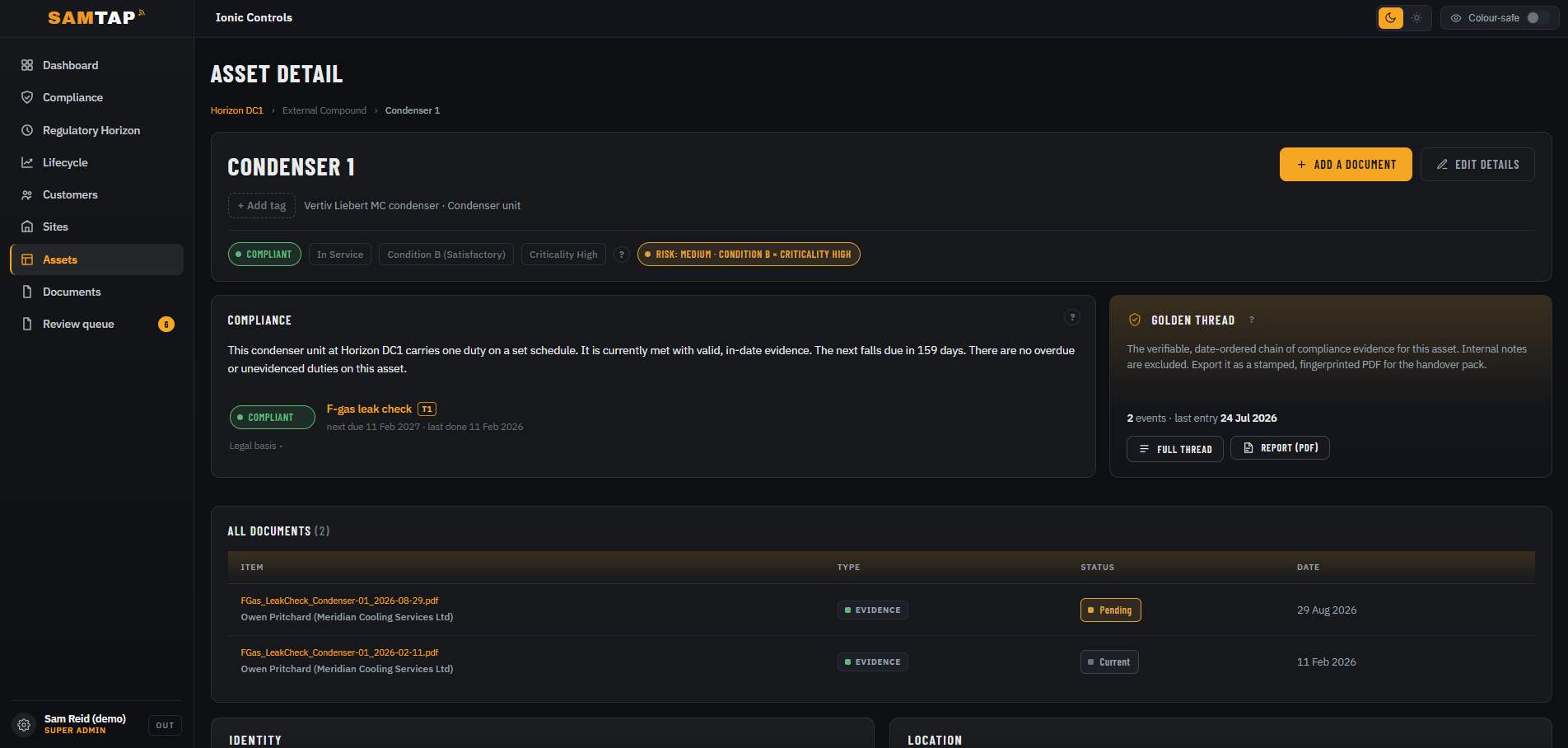
The platform comes first
The estate is managed through the browser-based dashboard. NFC and QR are field shortcuts into the same controlled record, not the product’s main purpose.
NFC makes the physical link immediate
A locked NFC tag lets an authorised user tap the asset and open its record without typing an identifier or searching a register. It is quick in plant rooms and reduces mistaken identity.
QR provides the universal fallback
Almost every current phone can scan a QR code using its camera. A printed code also makes the digital destination visible and provides resilience when NFC is disabled or unfamiliar to the user.
Identity matters more than the medium
The purpose of a tag is to open the correct controlled record. The platform, permissions and evidence process matter more than whether the final centimetre of the journey uses NFC or a camera.
Plan for the building, not the demonstration
Choose tag materials, fixing method, visibility and placement for the actual environment. Keep a human-readable identifier so the record can still be found when a phone is unavailable.
What SAMTAP delivers
SAMTAP tags combine locked NTAG213 encoding with a QR fallback and a human-readable three-word ID. Both routes resolve through the SAMTAP domain to the same controlled building asset record. No specialist app is required.
See what this looks like for your buildings.
Tell us about your estate, current records and the assurance gap you want to close.
Request a quotation